

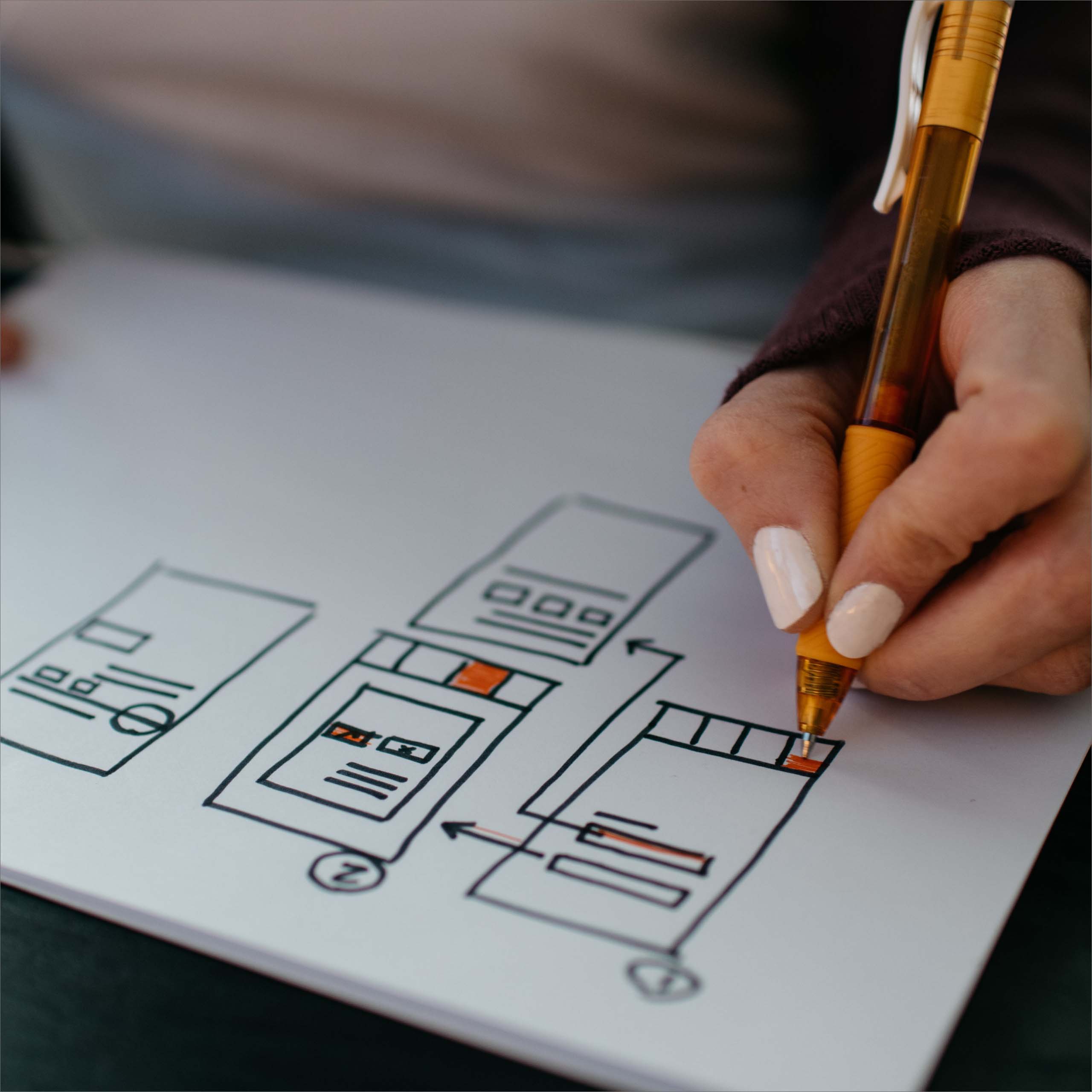

the four steps before the big reveal.
There’s wisdom in knowing nothing
The design process is difficult to understand, especially because we’ve been programmed to believe that the end result or the “big reveal” has more weight than the research that goes behind it. At school you were rewarded for saying the right answer after you pick up your hand, at work you’re rewarded for a bright idea. There’s anxiety in looking less knowledge. But why should that be the case? Your content is what ties everything together. To use a chess analogy, there’s “moving pieces” involved in not only how your design lives in its intended environment, but how it sustains its shelf life for some time. So, in the interest of being helpful, I’ll share my top 4 tips to do powerful, meaningful research (not a bookworm’s approach but a designer’s approach).
Experiment how that font behaves with colour. Whether its colour you’ve been provided with or its colour you feel the brand needs, the use of colour affects the mood of the design, how it makes the user feel. The use of red at KFC restaurants sub consciously makes the consumer not stay there for long periods, always opening space for new consumers to eat. Play around with different palettes. Depending on the brief use vivid colours to create an eye-catchingtone and immediately grab attention or earthy pastels to use colour in a subtle way.
Once you have the typefaces and the colour palette you intend on using, experiment with images or footage. See how it all fits together. If the brief allows for more adventure, that should reflect in your image choice. Use abstract images, unconventional camera angles, images with natural light or black and white images. If it’s possible, stay away from images that provoke racial tensions, stereotypes and religious prejudice.
Don’t be afraid to use subtle patterns and iconography to express and the brands mood in relation to how they want to portray themselves to the public. Something as simple as using knots and crosses to portray a playfulness really brings young audience that much closer to you.
Once you’re done, knit all of these things together and slowly start prototyping. Creating various options for people to view. Don’t be afraid to get view or opinions from complete strangers. I often feel their views are the most unbiased and completely honest.
“If we only test bottle openers, we may never realize customers prefer screw-top bottles.”—Victor Lombardi, Why We Fail
Create different environments for you designs to live. For digital designs, Facebook banners, HD videos, Animated GIFs, logo animations. Experiment with music, option if our brains don’t remember something visually, a certain jingle or chime triggers the brain in remembering.
If you feel something is missing in this phase, go back to (step 1) and find elements that will tie everything together. Often a pattern or a color palette you used before just adds the signature or seasoning your dish was missing.
Once you’re confident about your prototypes, test them out and be prepared for any type of feedback. If someone completely hates what you’ve done, ask them why? What about the colour or imagery they don’t like. Explain your thought process, show them your initial sketches. As much as you want to be possessive of your work, don’t forget, it’s a collaborative effort.
So, the designs and concepts have been approved. You’re feel like a million bucks. Now what? The beauty of the design process is that there’s so much “left over” from it that you have a starting block on the next project. Meaning you have half of step 1 already.
If you have the time, also layout your designs in other environments foreign to your brief. For example, if everything was done online purposes add your designs to print media. I often find a strong design can live on any medium and its strength should be shown in its versatility.To sum up, when we’re talking about design research and execution, it’s about evidence-based design. There’s strength in the thought process because it ensures overall user-experience and satisfaction. Let’s create a world with thinking designers.
Leave a Reply